
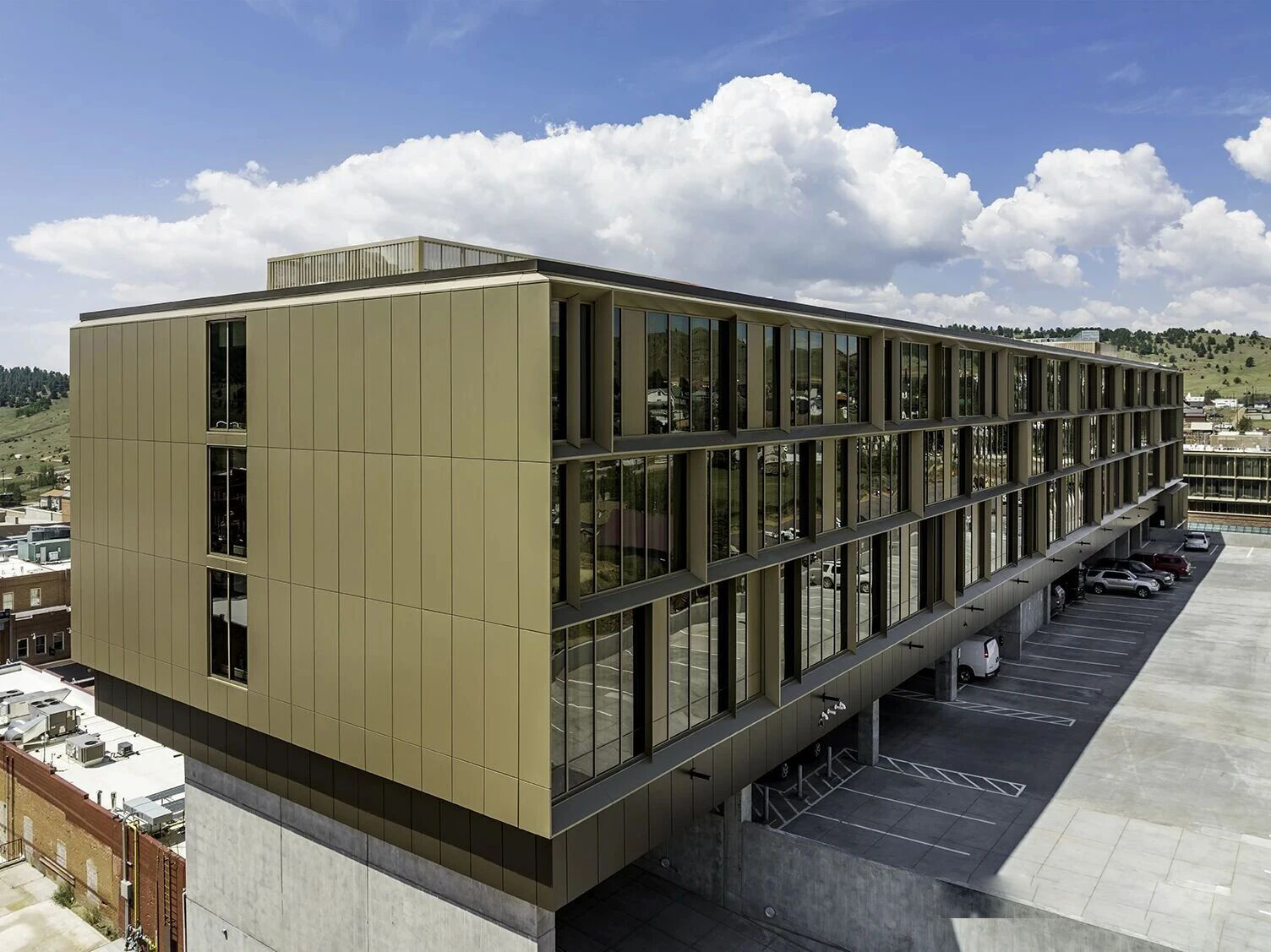
Pain point issue: Currently, most of the aluminum curtain walls in public and residential buildings are deformed. The surface of the board shows obvious wave deformation, locally accompanied by bulges, depressions, and warping, and even distortion.
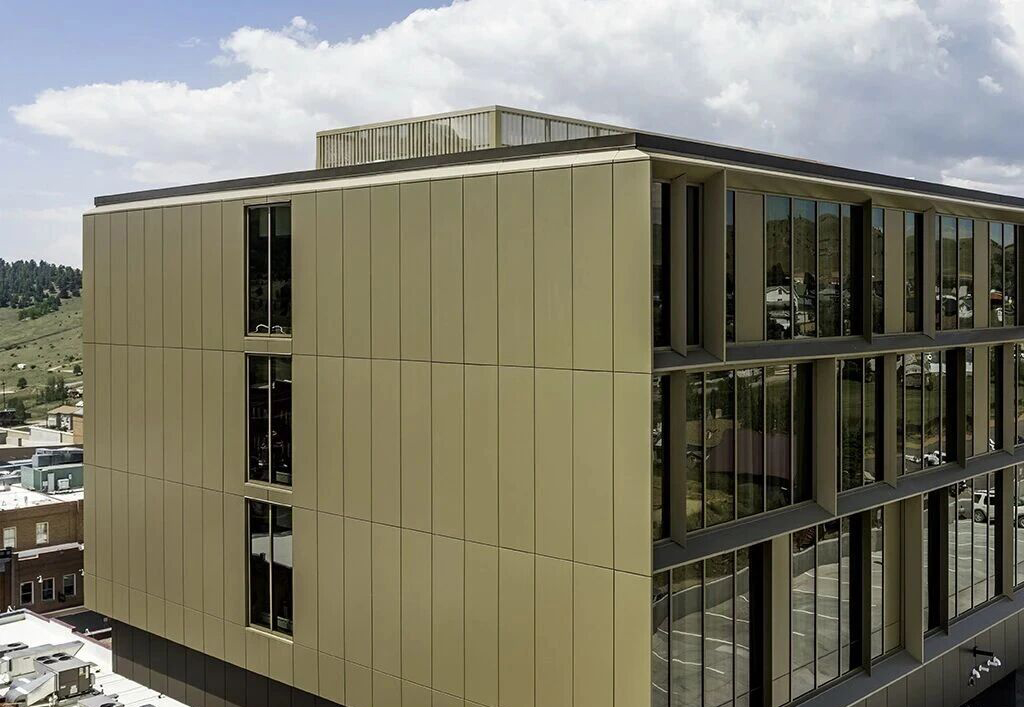
The causes of special factors include residual stress inside the material and thermal stress during the coating process, initial stress caused by improper installation sequence and process, and microenvironmental thermal effects.
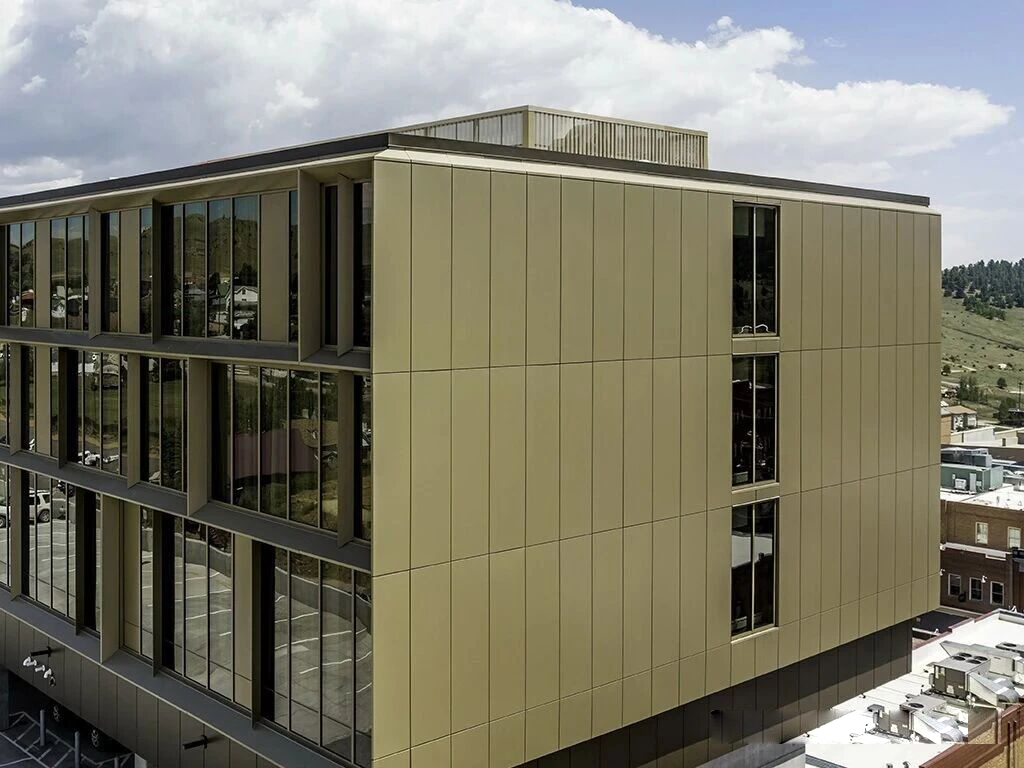
Design recommendation: In order to reduce the deformation of aluminum curtain walls caused by special reasons, it is necessary to improve their overall high-quality requirements.
·Strict control of residual stress and baking thermal stress in materials can be achieved by controlling uneven furnace temperature or cooling rate. If the furnace temperature is uneven or the cooling rate is not properly controlled during the baking and curing process after spraying the board, it will cause thermal stress inside the board. After installation, this stress gradually releases as the temperature difference between day and night cycles, forming wave deformation.
·Improper installation sequence and process control can lead to initial stress caused by improper installation sequence and process. In order to meet the deadline or for other reasons, the installation was not adjusted from bottom to top or in blocks according to the prescribed order. For example, forcibly inserting aluminum plates into already fixed frames, or not following the principle of "middle first, then surrounding" when tightening bolts, so that the plates are in a prestressed state at the beginning of installation.
·Strictly controlling the thermal effects of the microenvironment can ensure smooth ventilation and heat dissipation in the cavity behind the aluminum plate, without heat accumulation. To prevent wave deformation and bulging of the aluminum plate caused by thermal stress expansion in the back cavity.

High quality products, high-quality services and high-quality

Focus on us
HANBERT
Tel: 0757-22682270
Phone: +86-135 314 008 83
E-mail: info@hanbert-tech.com
Address: 1612,4th,building,ZhiyePlaza,Daliang,Foshan,Guangdong P.R.of china
Copyright © 2021-2026 HANBERT All Rights Reserved. 粤ICP备2021118030号  Power by:
 Hanelink.com