
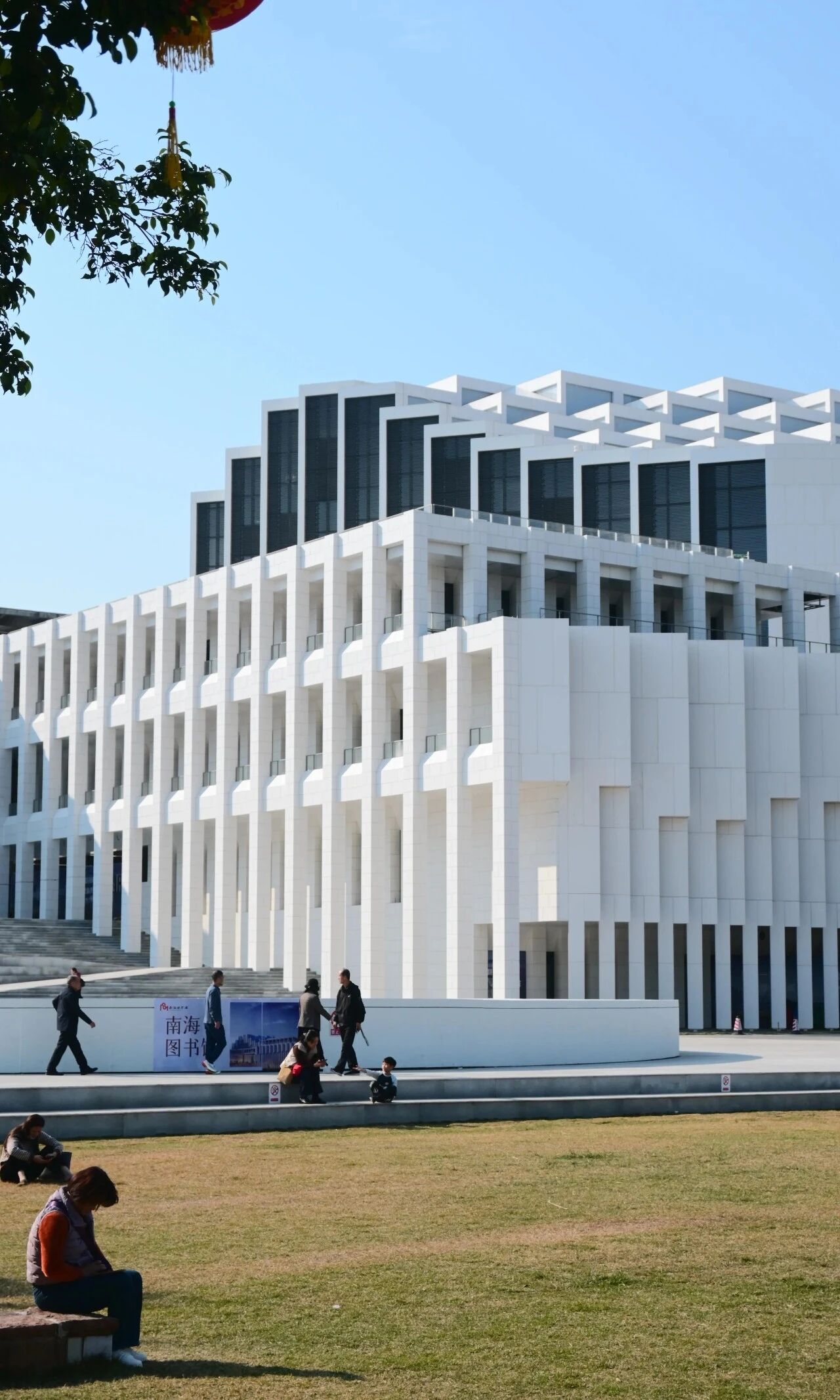
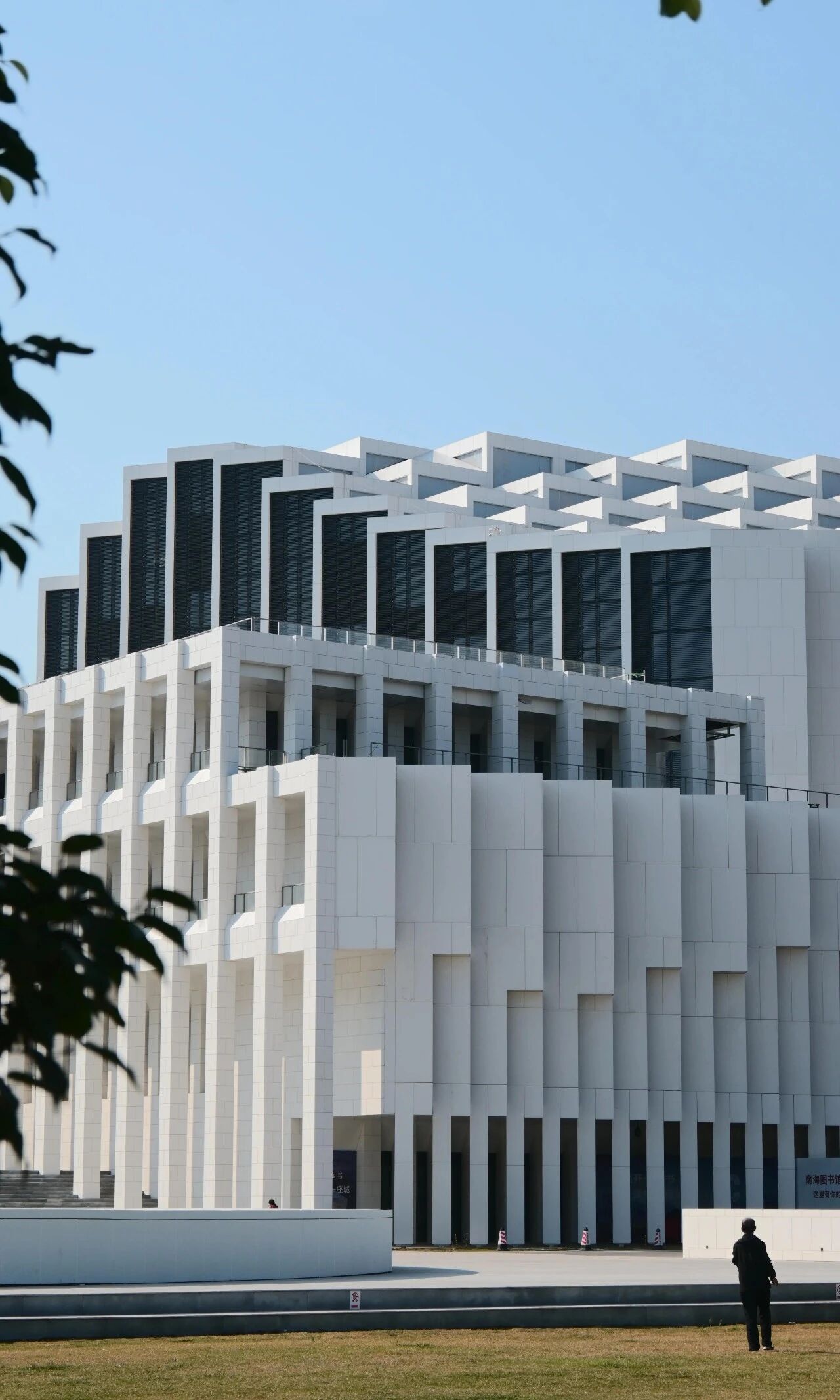
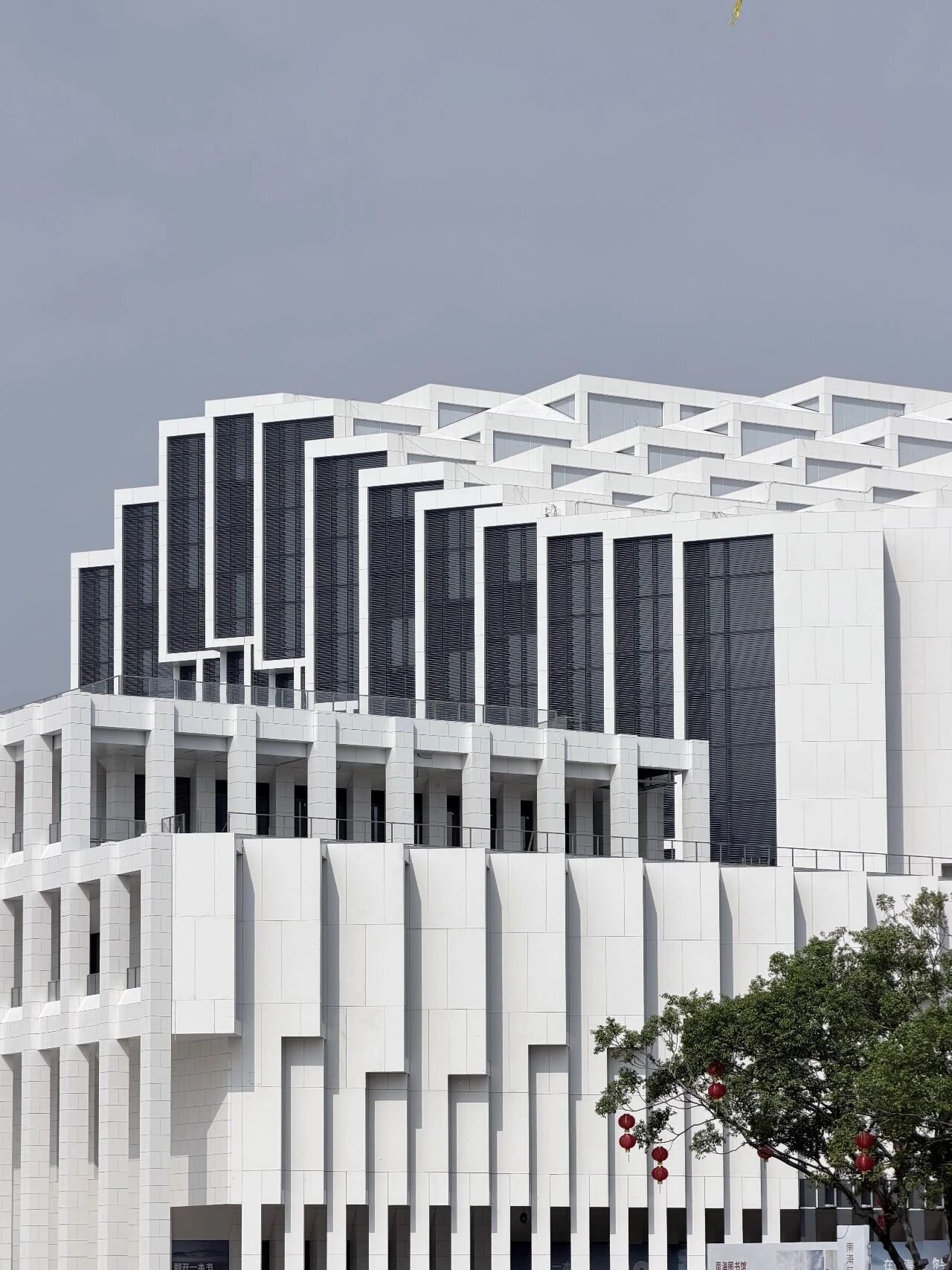
At Qiandeng Lake in Foshan, the latest work of I.M. Pei's architectural firm, the new Nanhai Library, has quietly opened recently.
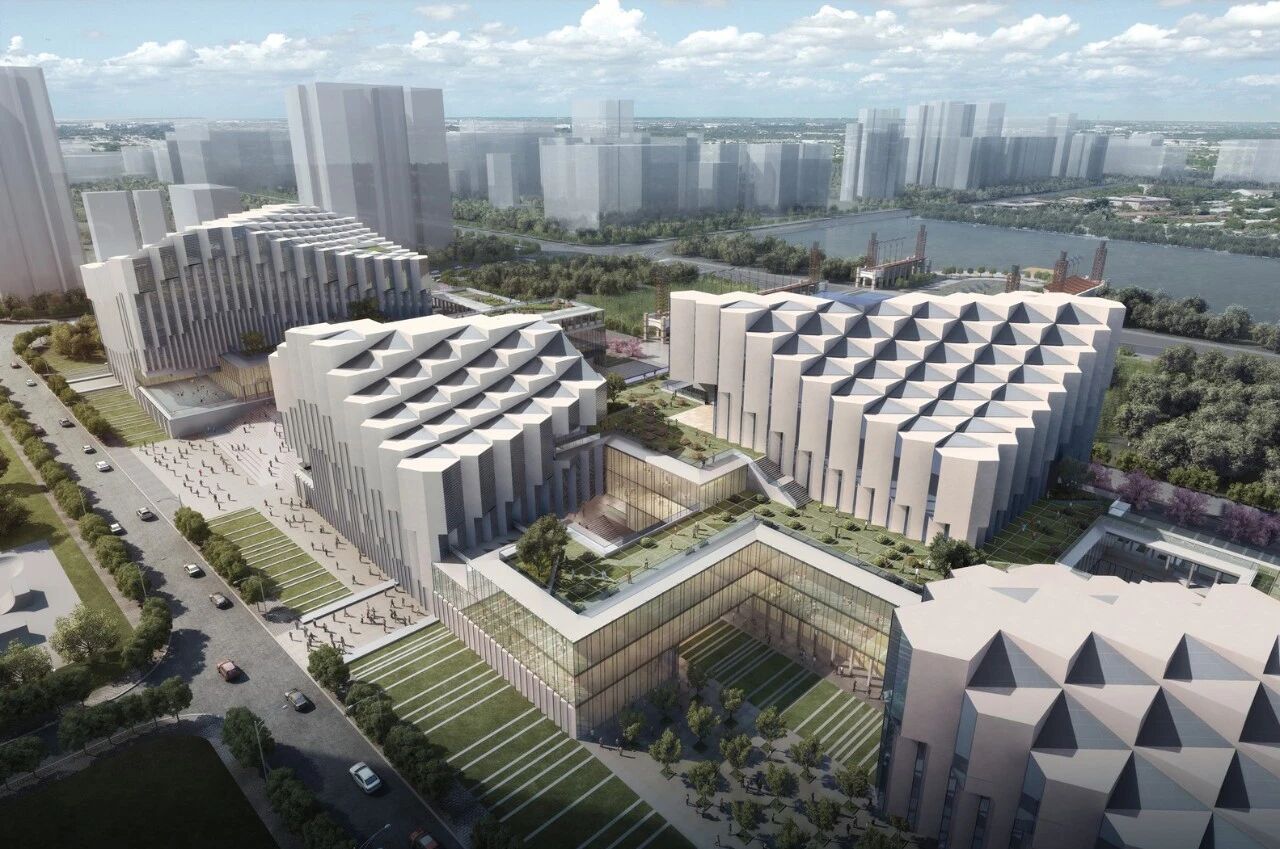
The originally heavy roof has been dismantled into pixel like geometric blocks, stacked, combined, and undulating.
Looking back, I actually pieced together the outline of a traditional Lingnan roof!
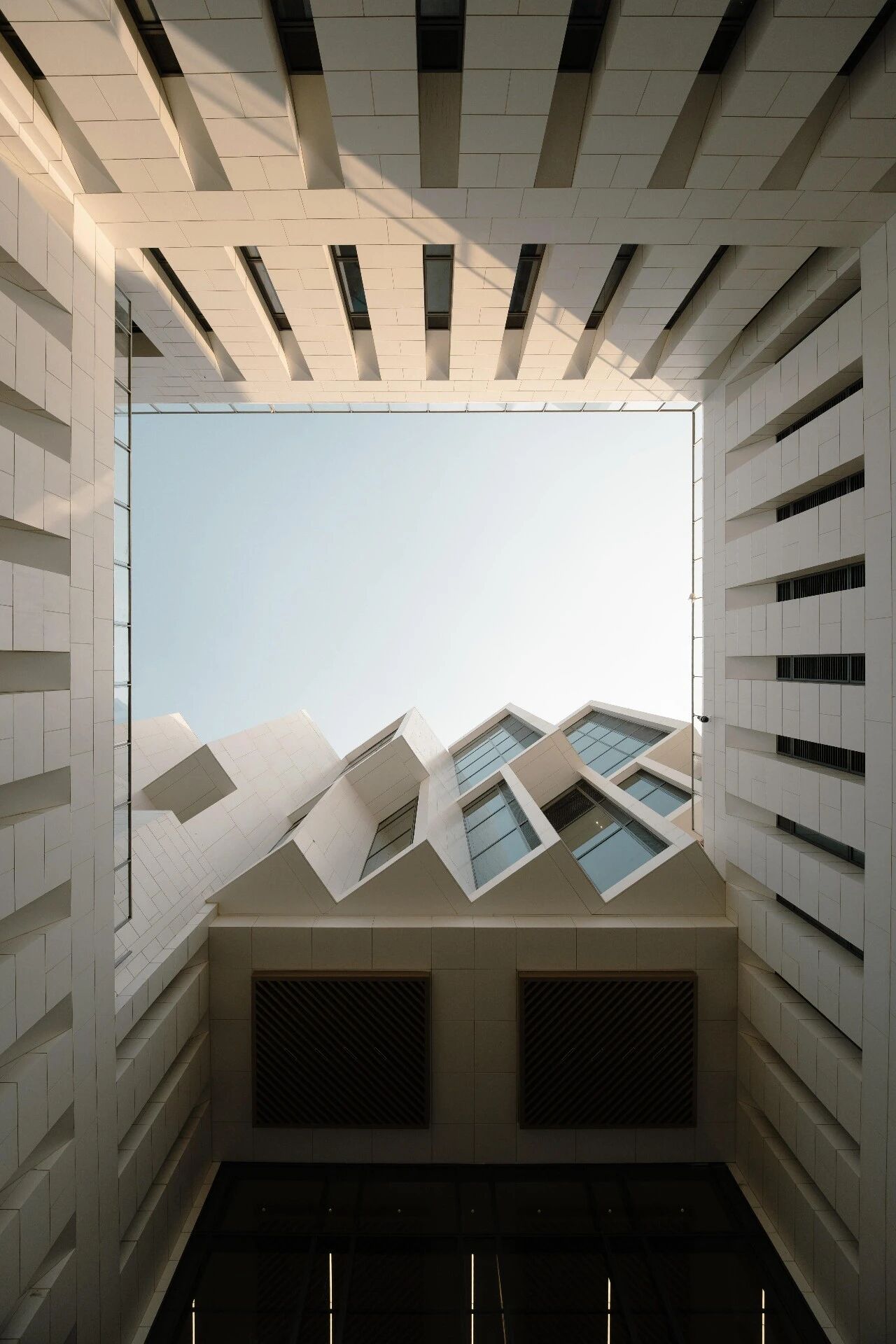
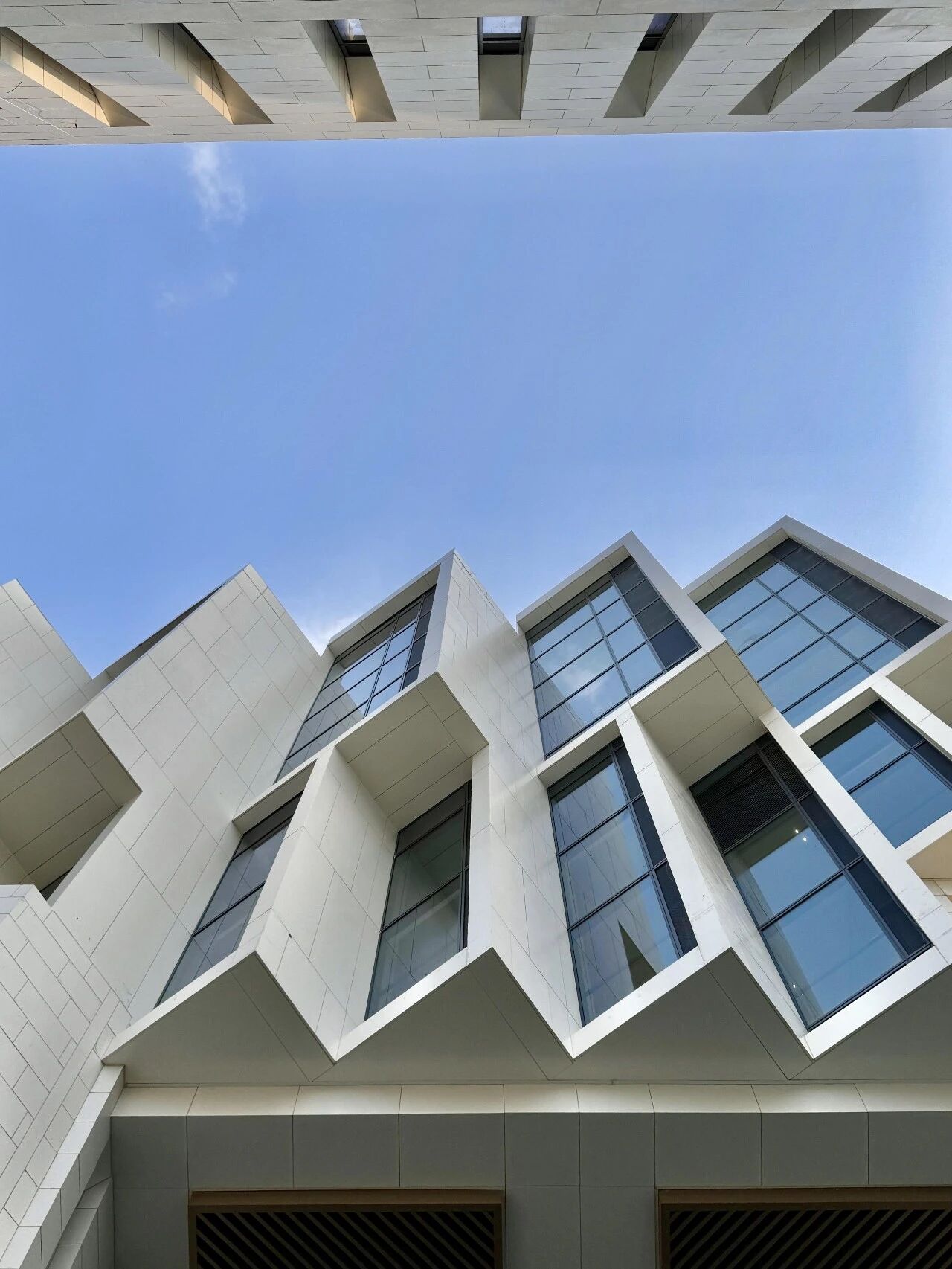
Walking into the architecture, the familiar 'Bayesian aesthetics' greets you! The corners of the staircase handrails conceal precise proportional relationships.
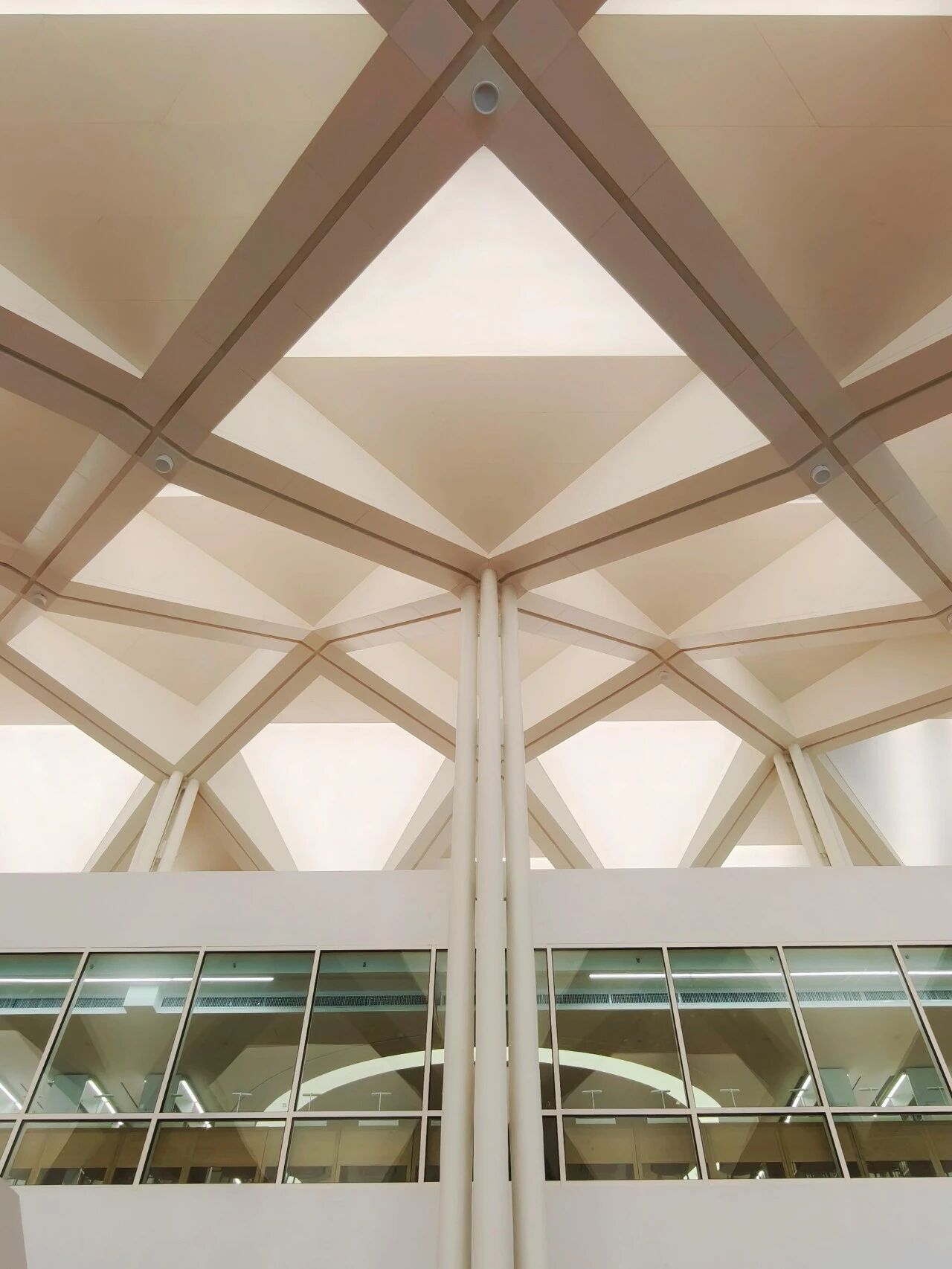
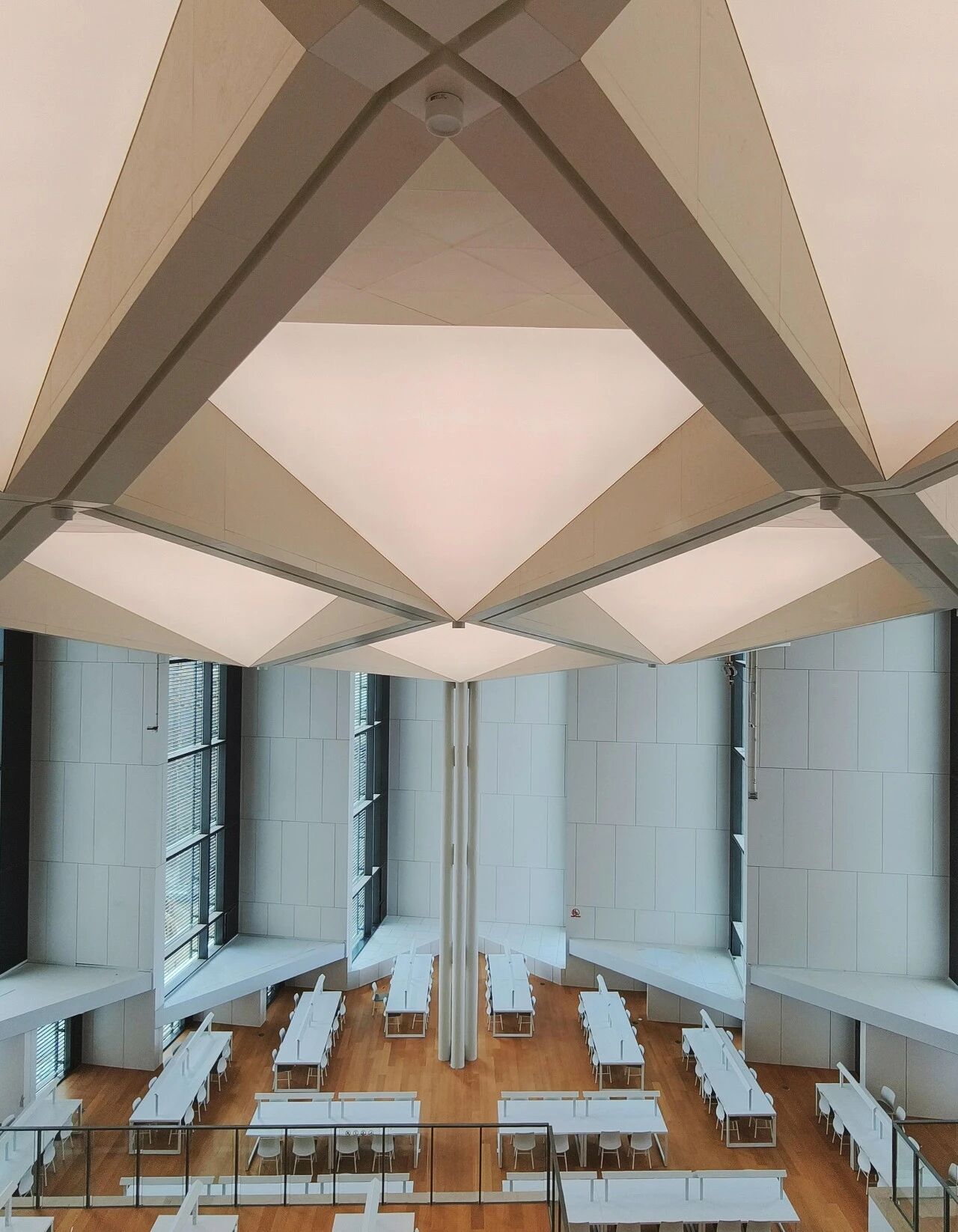
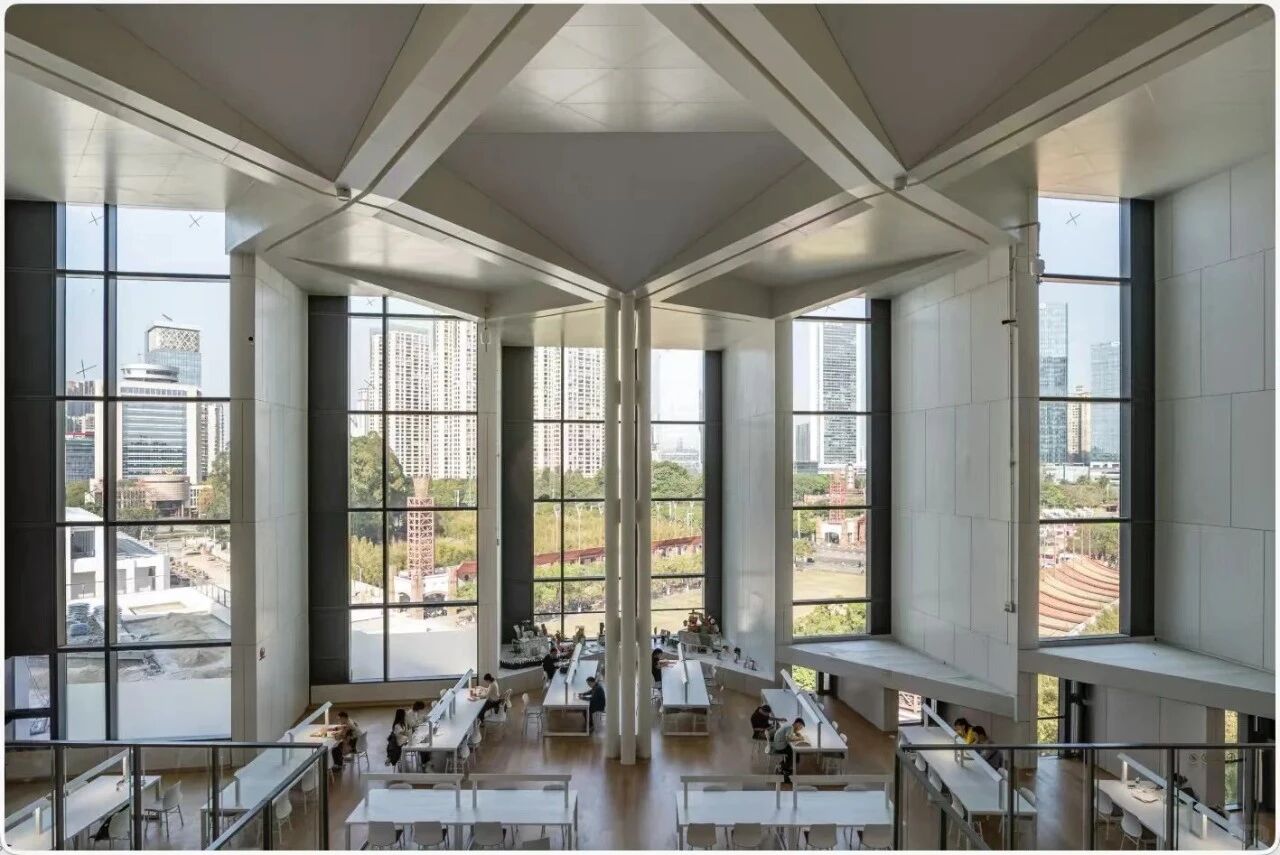
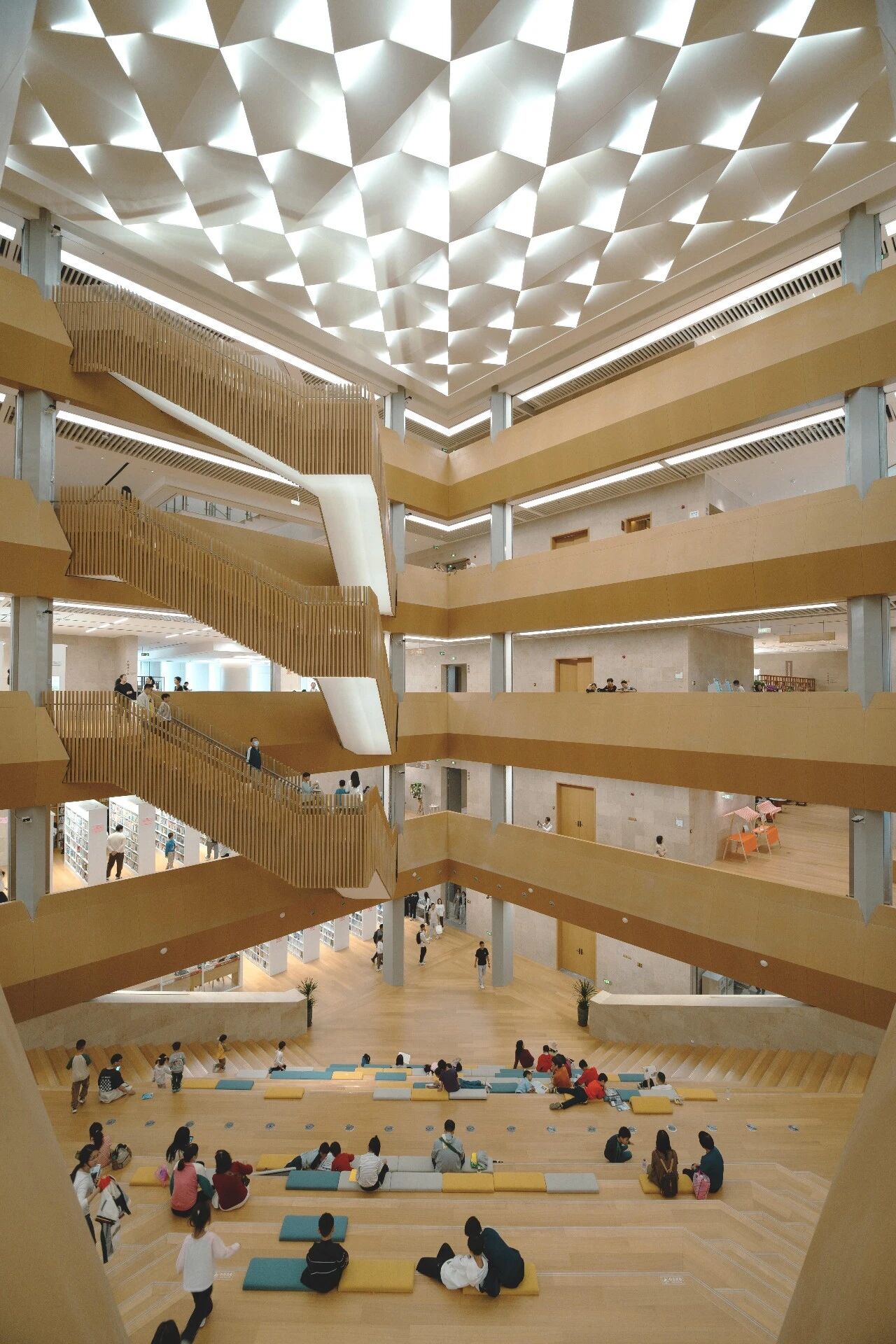
This concise geometric block, symmetrical proportional control, dialogue between architecture and light……
You can see it in both the Suzhou Museum and the Islamic Art Museum designed by Bei Lao.
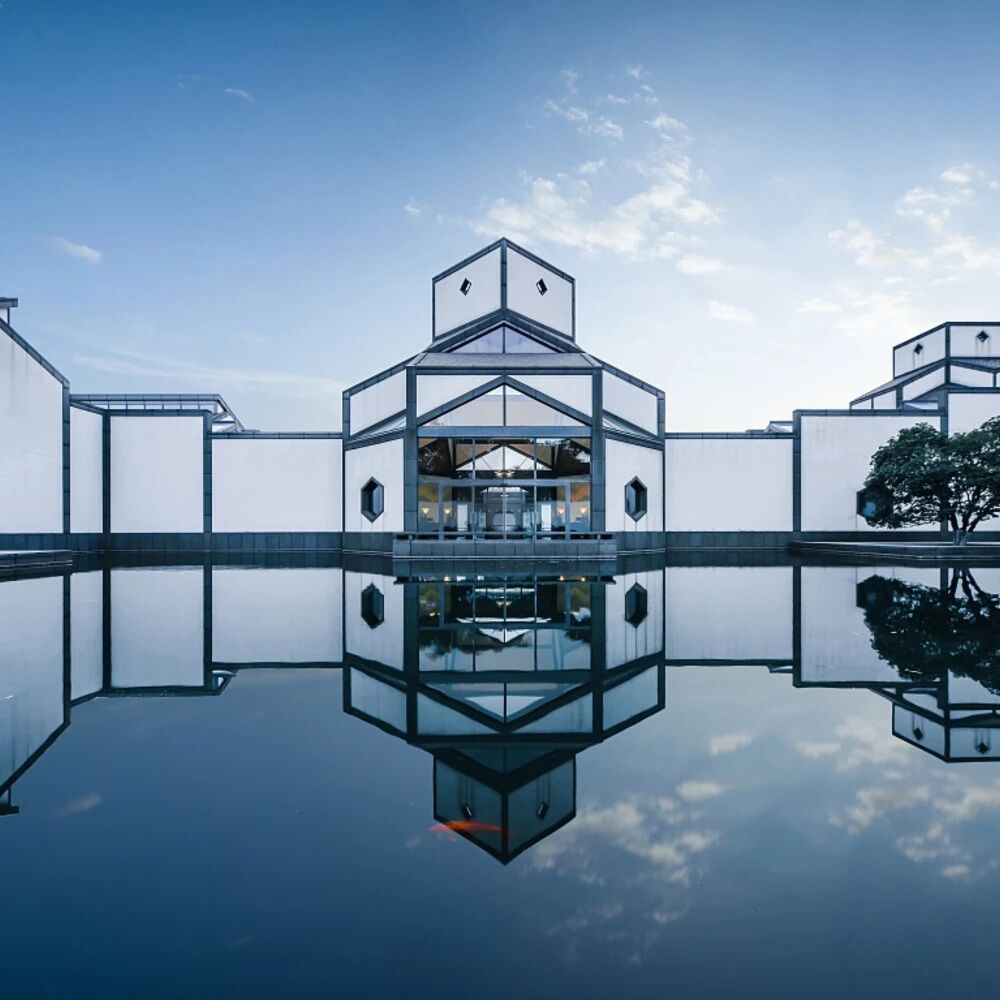
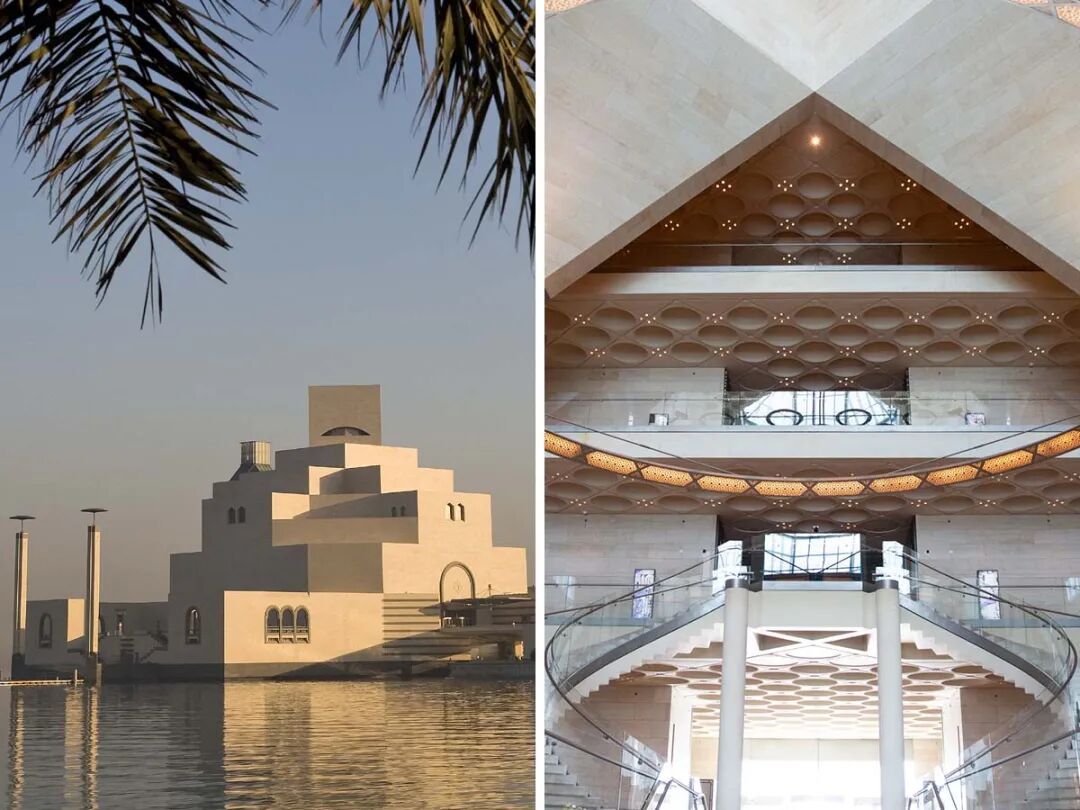
The difference is that this time the design is more 'lightweight'.
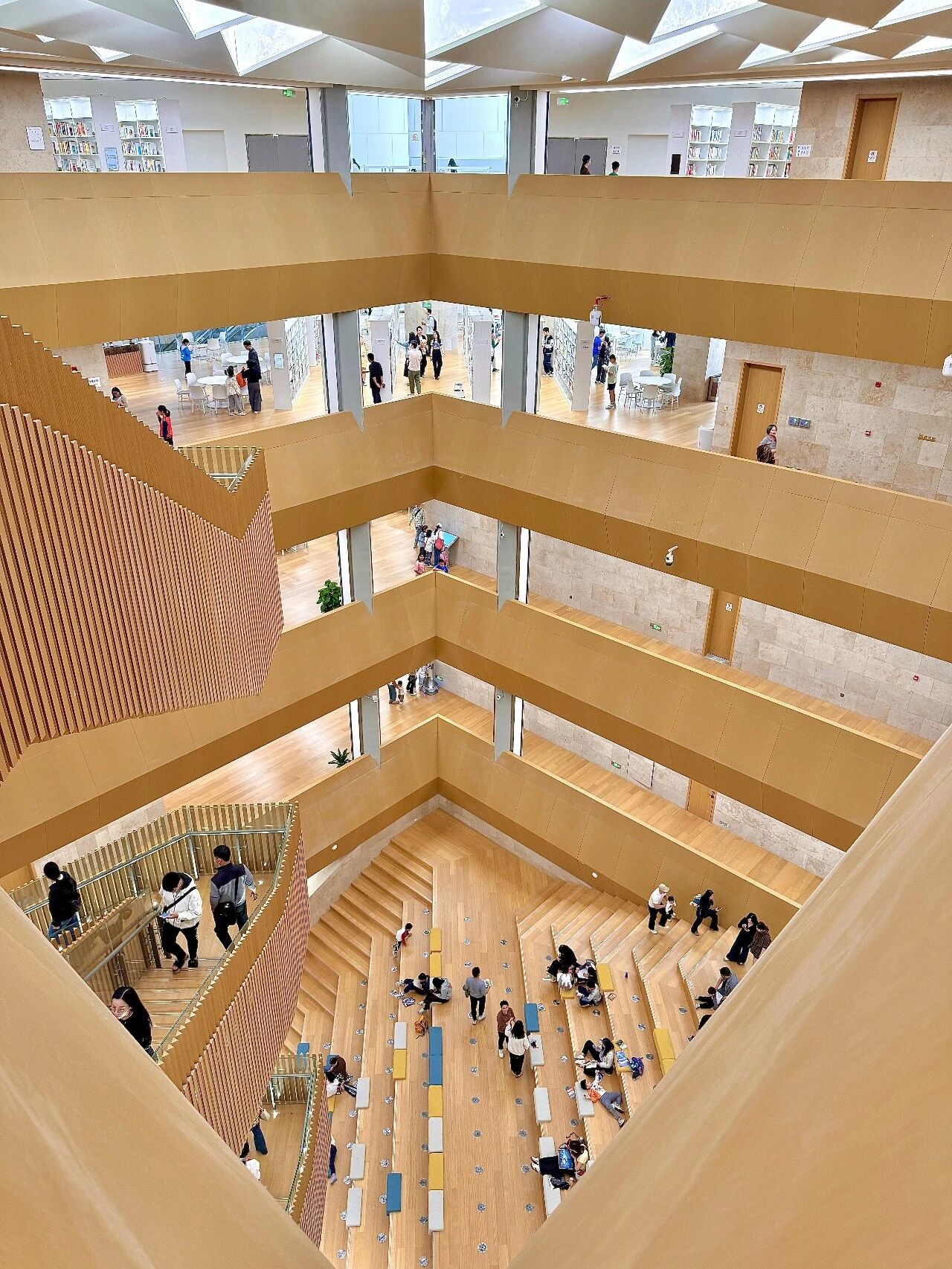
The interior is lined with warm wooden tones, making the entire space light and gentle.
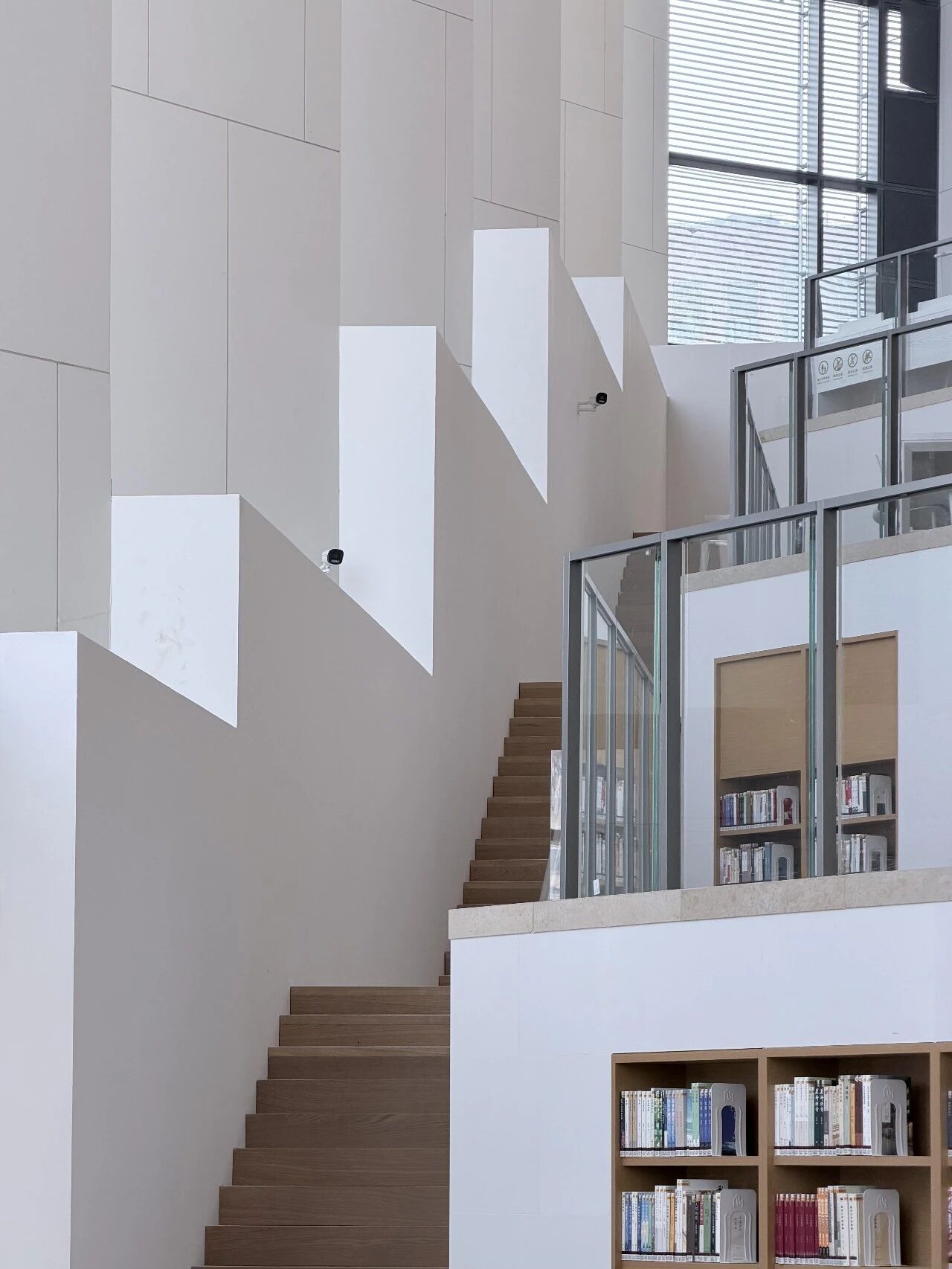
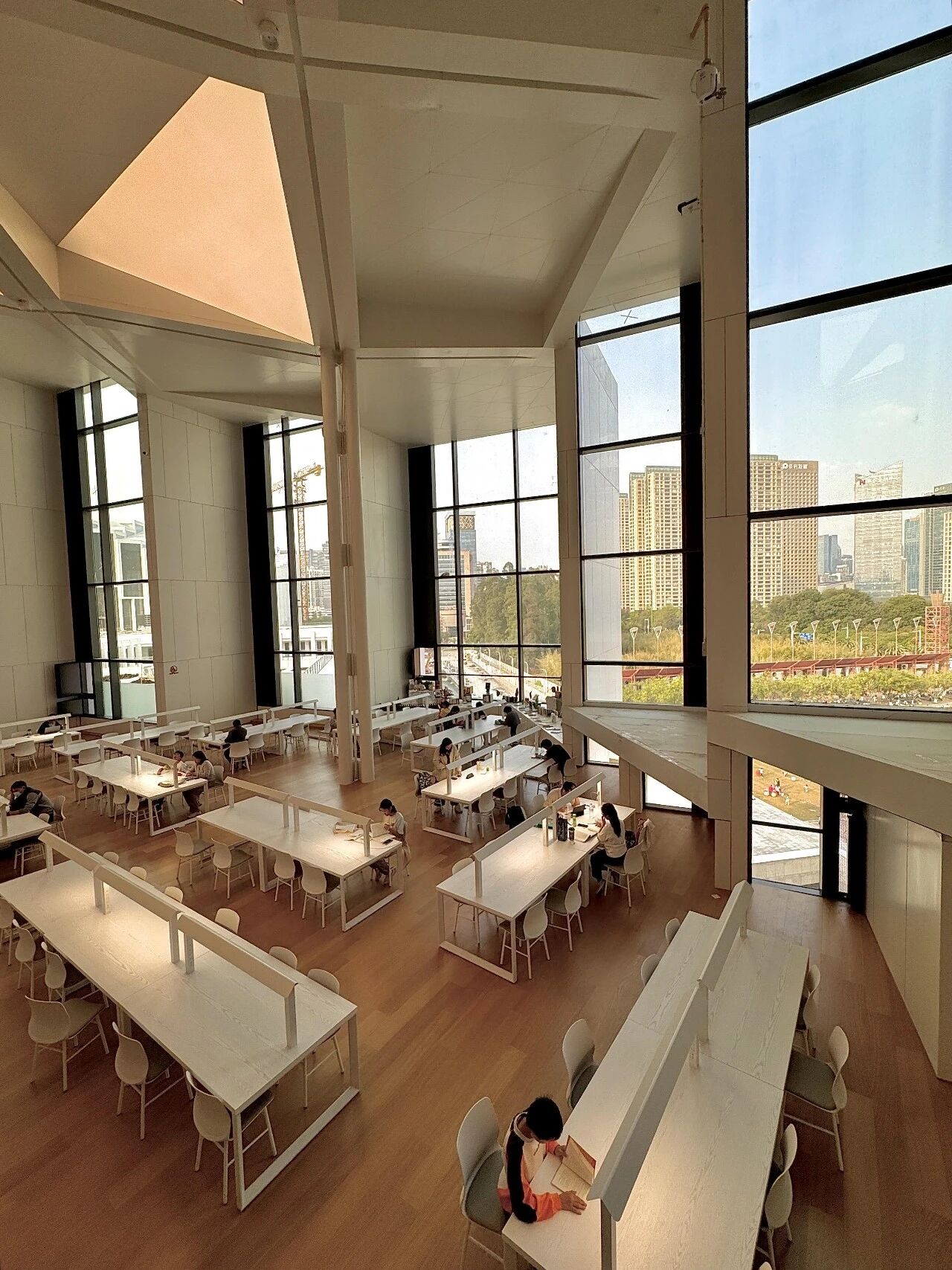
During the design of the Doha Islamic Art Museum, Bei Lao once said: The strong sunlight in desert areas can inject life into buildings.
In Foshan, this concept has been expressed in a different way, without the scorching heat of the desert, but with the circulation of Lingnan light and shadow.
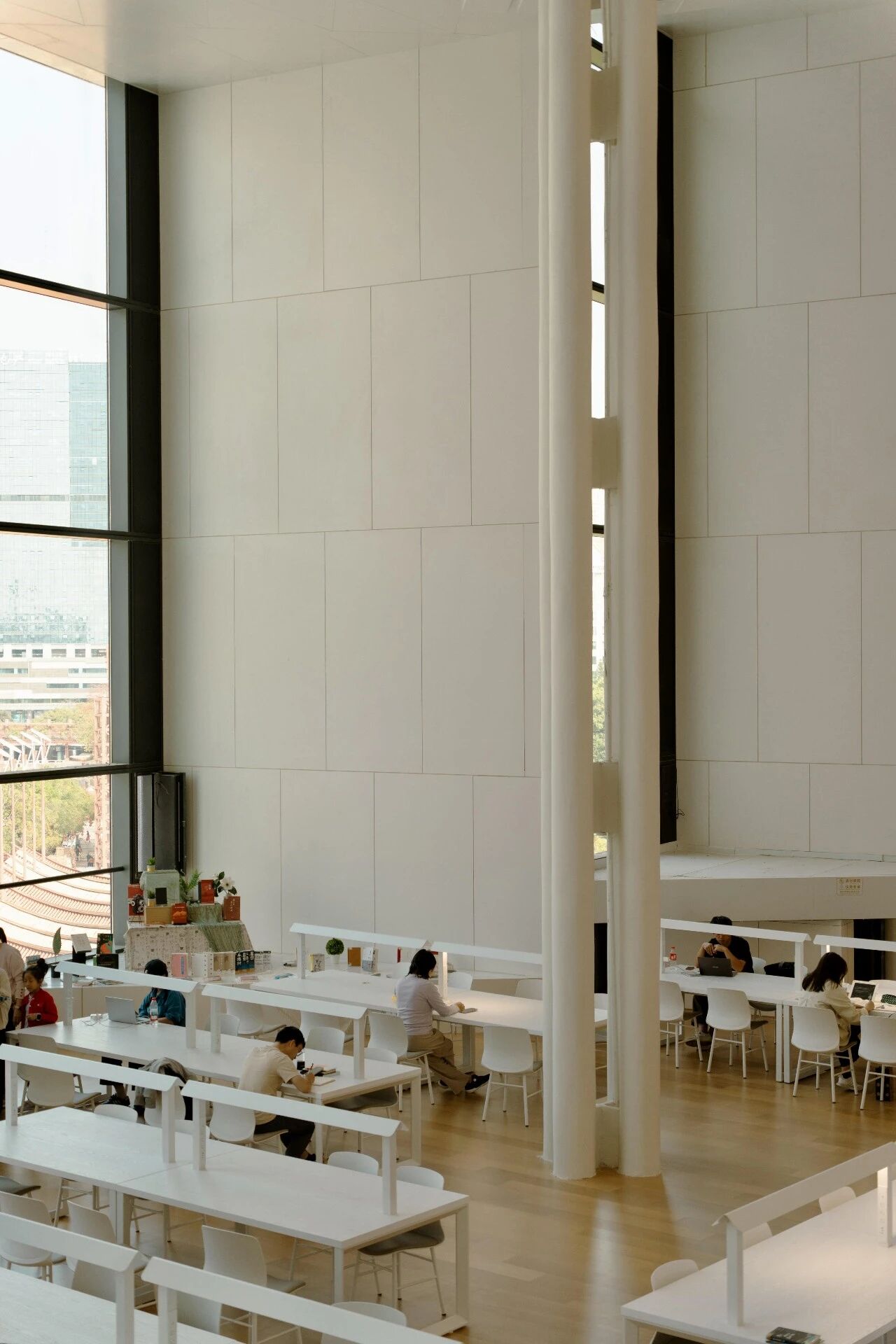
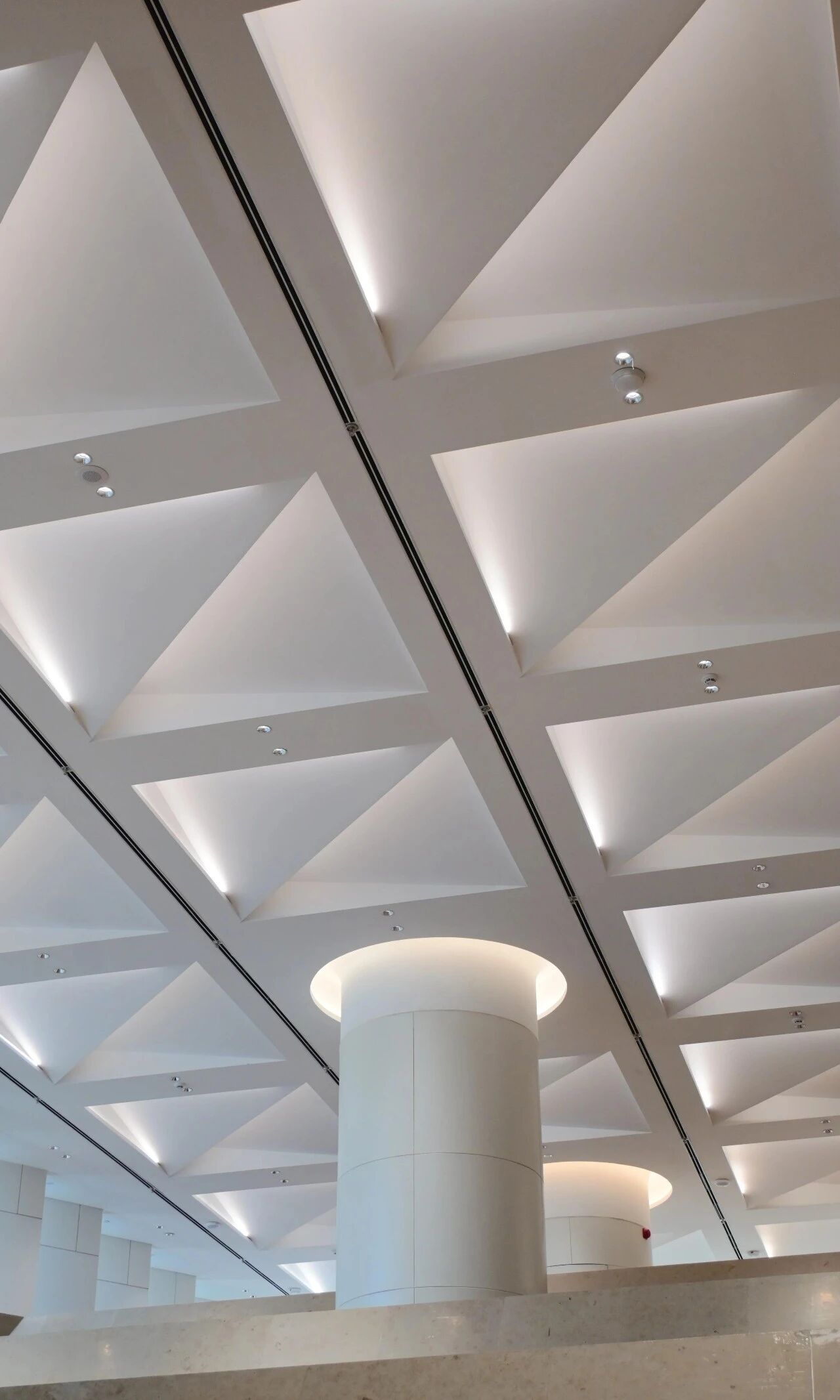
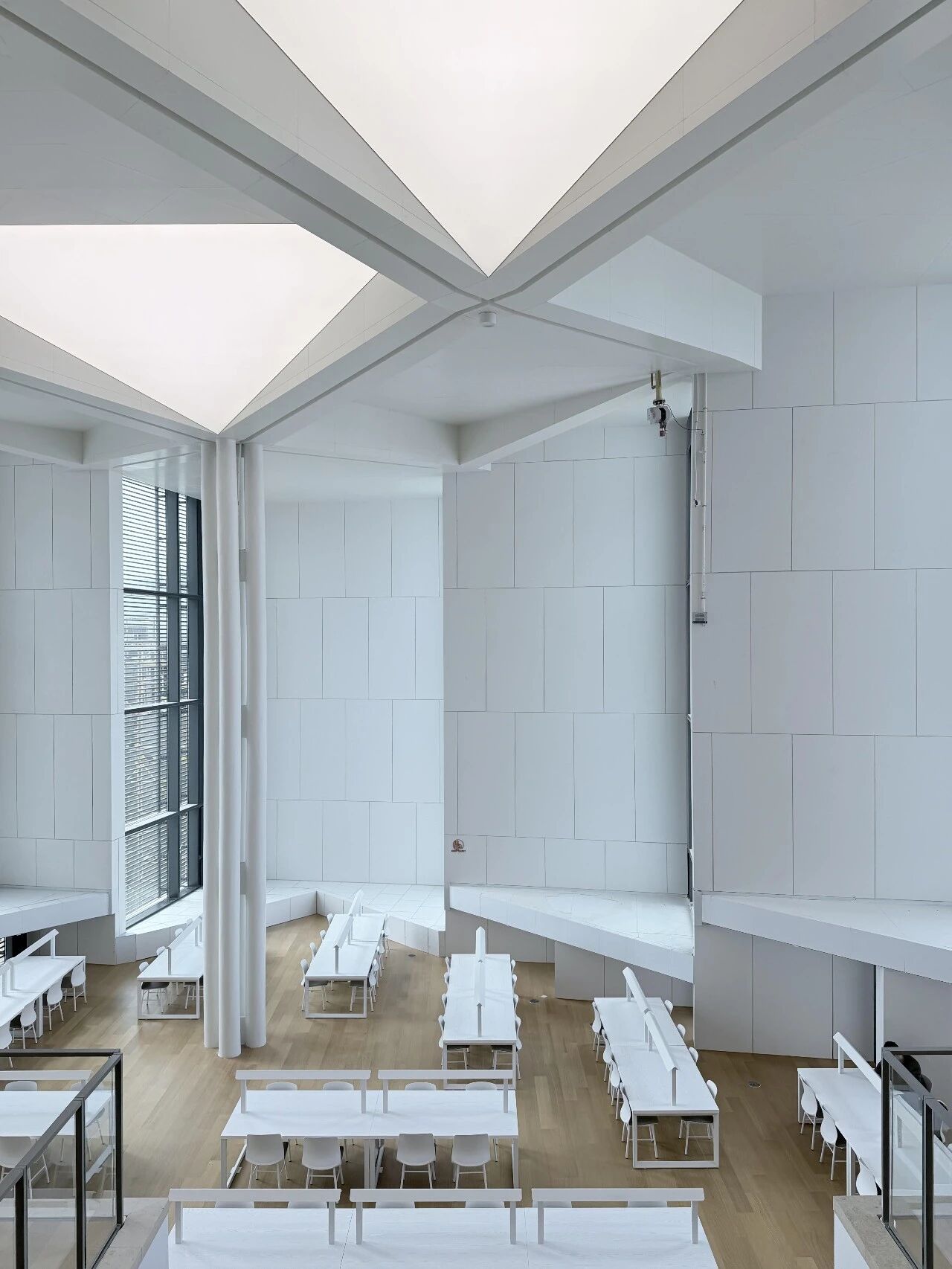
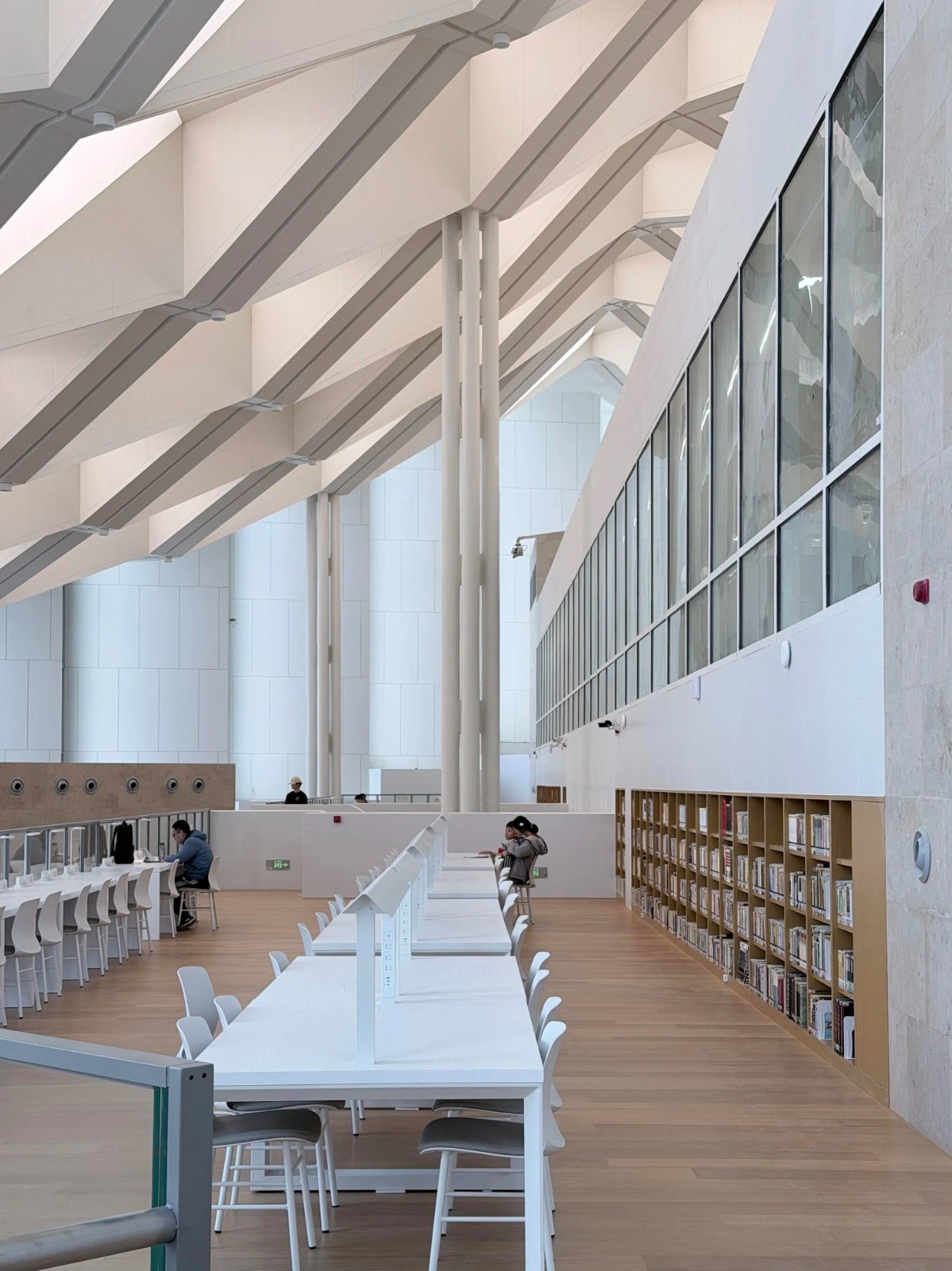
Inside the library, the triangular skylight design brings sunlight into the atrium.
Looking up, the edges cut the sky into a symmetrical geometric array, looking down, the light and shadow slowly move on the ground.
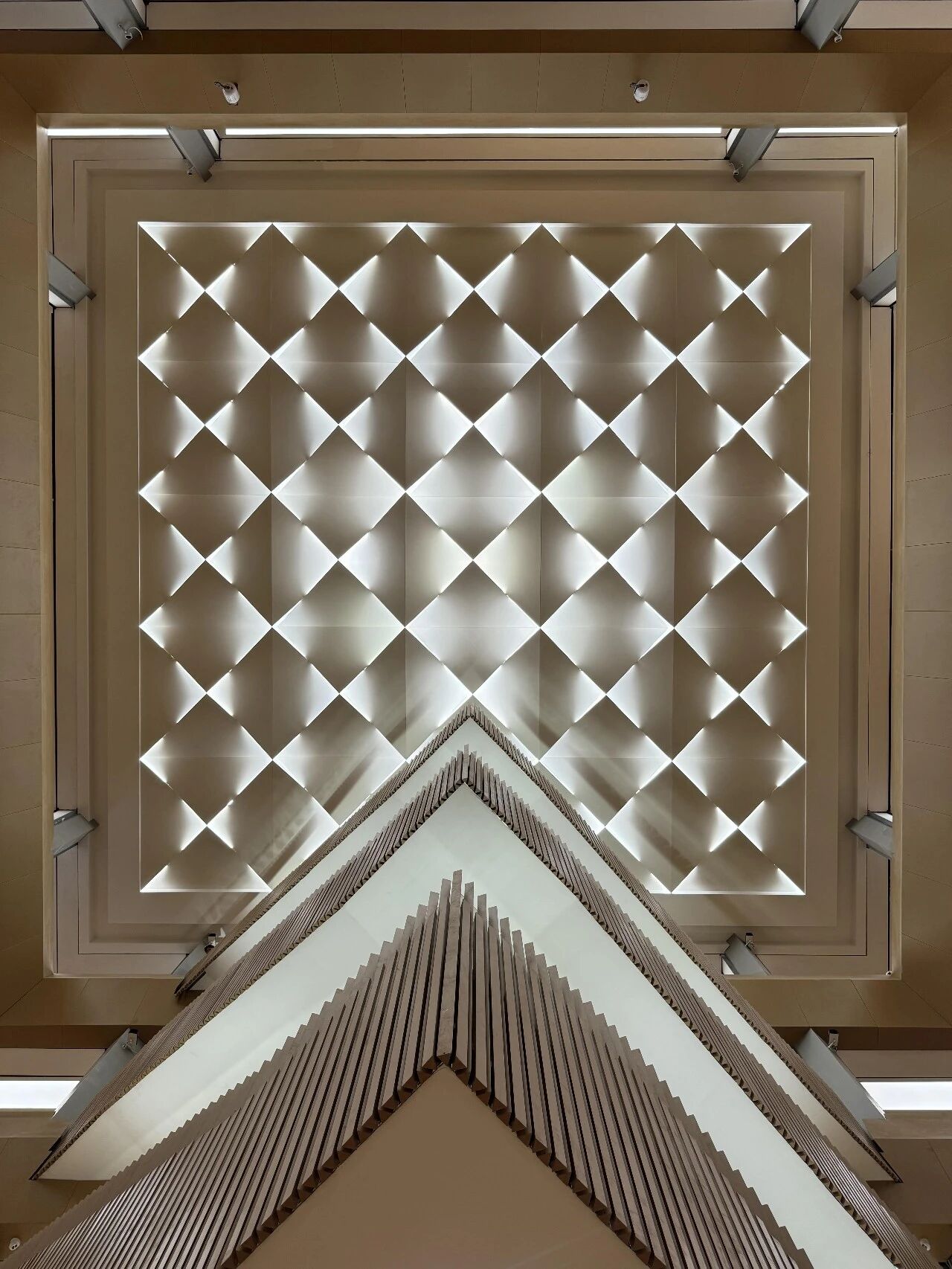
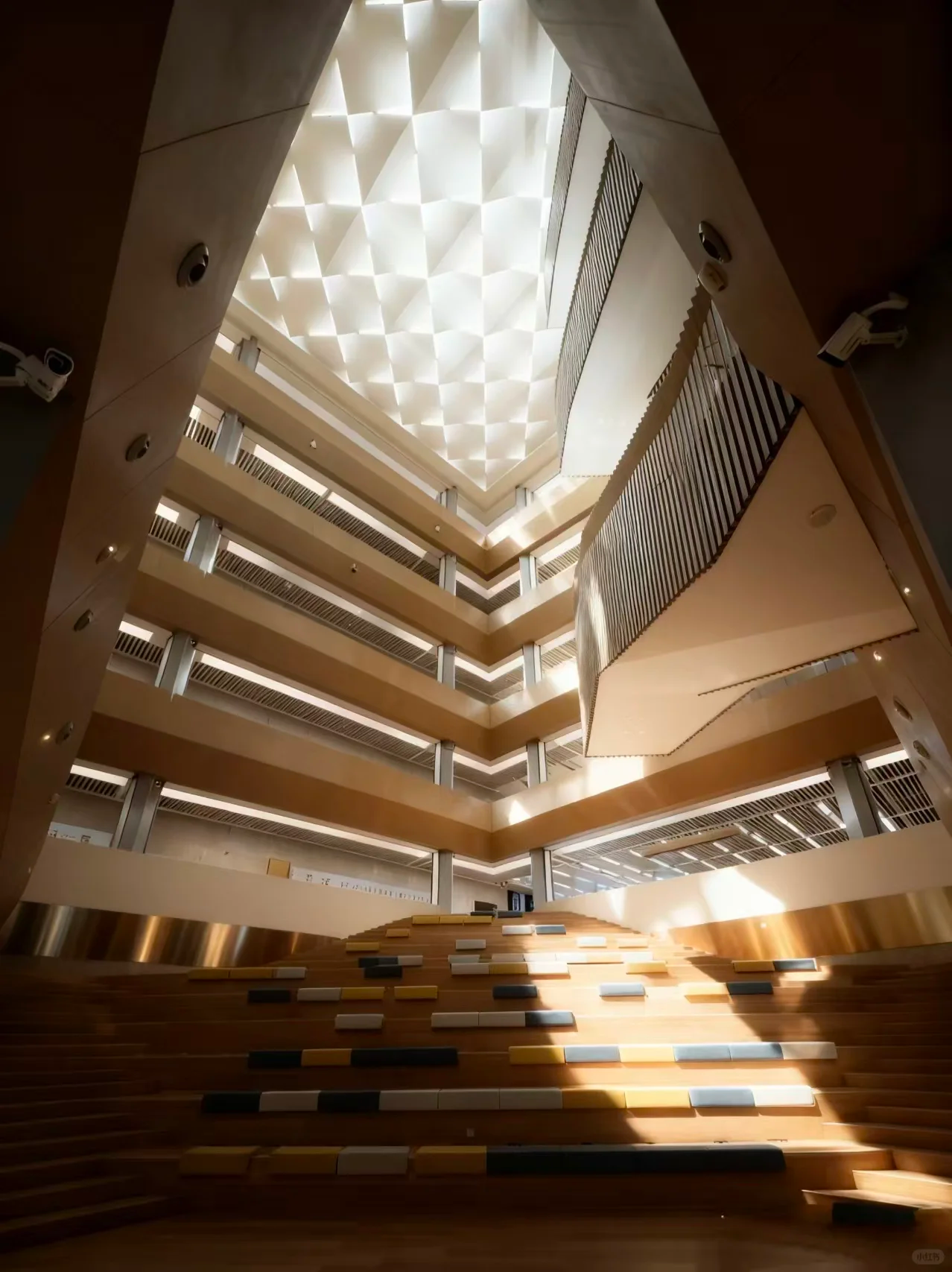
From morning till night, sunlight refracts in from different angles, and the light and shadow inside the building constantly change, making the entire space feel like it can breathe.
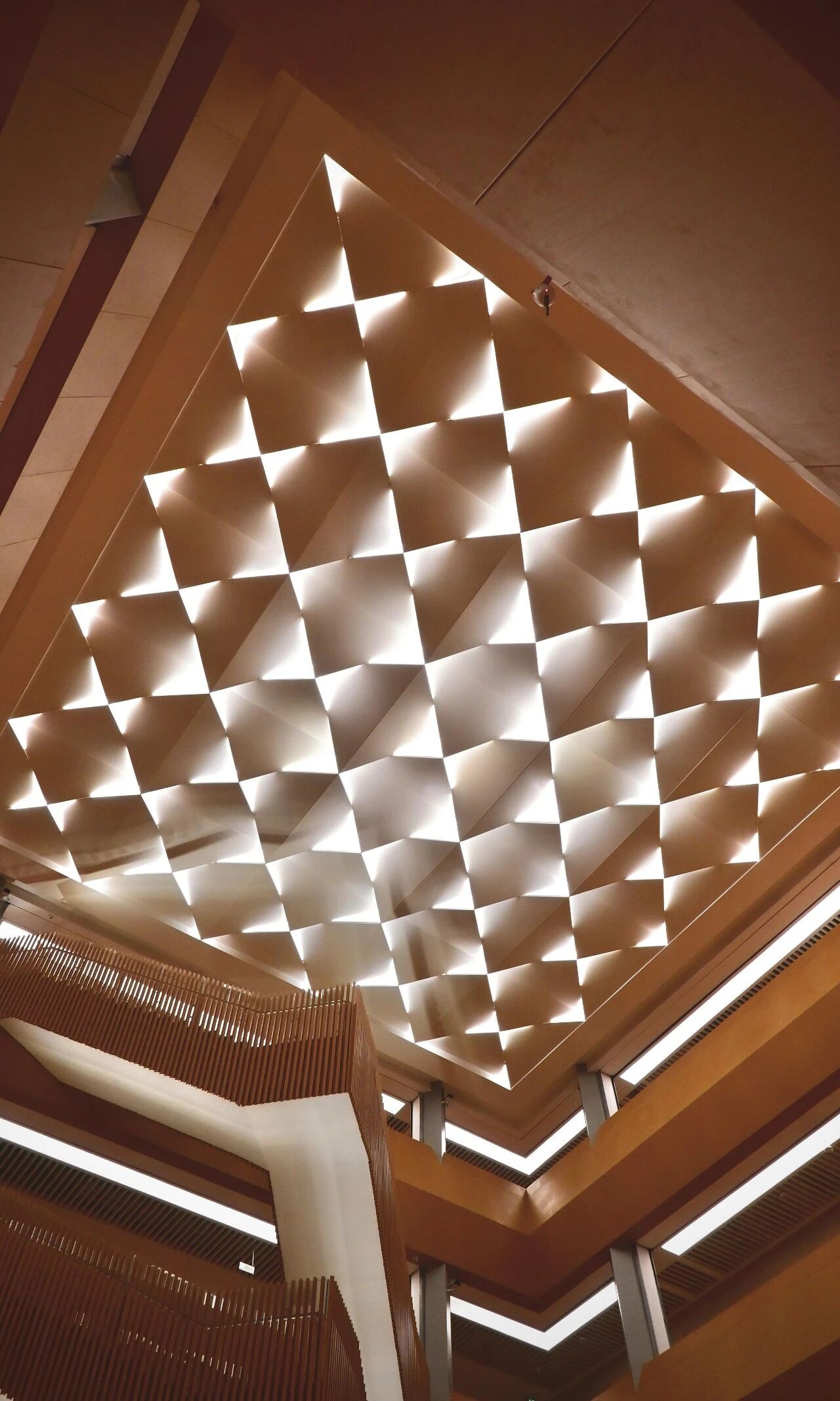
The designer also installed self shading systems on the facades facing different directions, which not only blocked the scorching sun in Lingnan but also prevented reading from becoming oppressive.
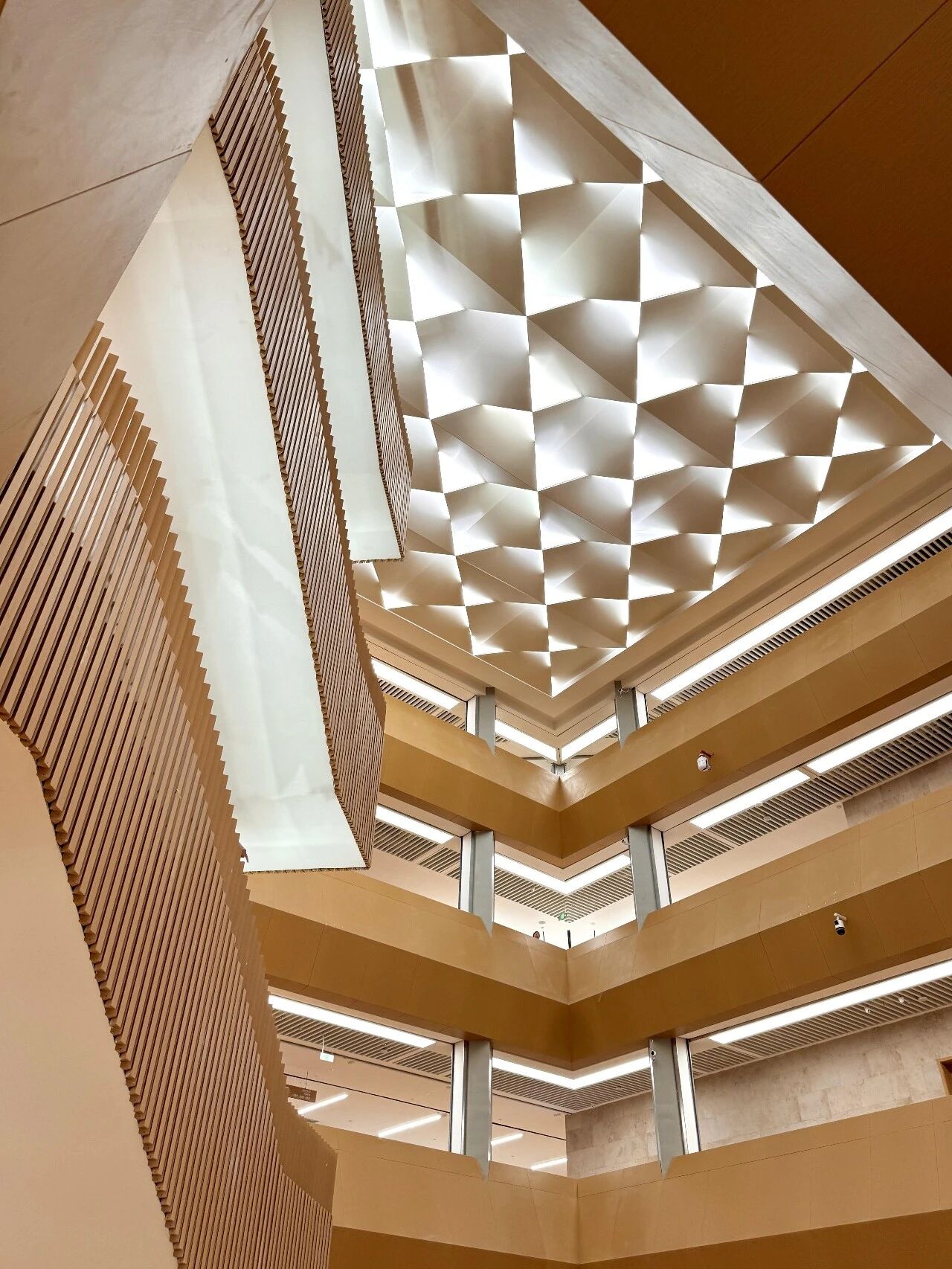
Of course, this was not personally designed by Mr. Bei before his death, but was completed by his team. Less of the master's later years of expression, but more sincerity towards the land of Lingnan.
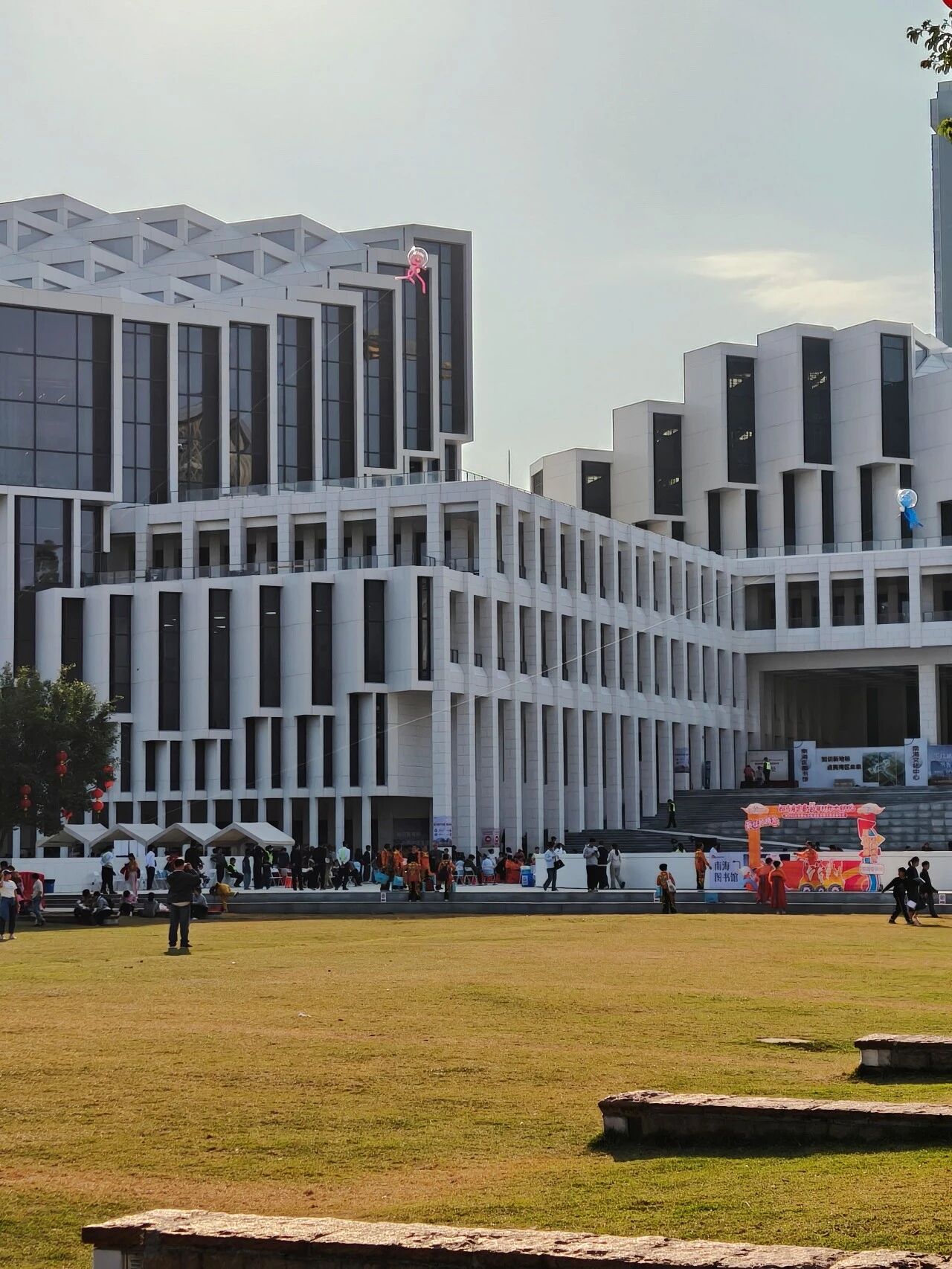
If given the opportunity, it's worth taking a look~

High quality products, high-quality services and high-quality

Focus on us
HANBERT
Tel: 0757-22682270
Phone: +86-135 314 008 83
E-mail: info@hanbert-tech.com
Address: 1612,4th,building,ZhiyePlaza,Daliang,Foshan,Guangdong P.R.of china
Copyright © 2021-2026 HANBERT All Rights Reserved. 粤ICP备2021118030号  Power by:
 Hanelink.com